
Cell Site Backup Power: Generator, Rectifier and Battery Maintenance That Prevents Outages
A cell site rides through a mains failure on a chain: the rectifier turns mains into -48 V DC and floats the batteries around 54 V, the batteries carry the load when mains fails, and a generator takes over before they run flat. Outages are prevented by knowing real autonomy, keeping rectifiers N+1, setting LVD priorities and acting on the right alarms.
In this article
- How does a cell site stay powered when mains fails?
- How long will the batteries hold the site?
- Why do rectifiers need N+1 redundancy?
- What are LVD and load shedding?
- Which alarms matter most?
- How do generators start and when should portable units be sent?
- How are hybrid solar sites different?
- Backup power maintenance checklist
- What to do in a long regional outage
- Frequently asked questions
- Sources
When the mains supply to a cell site fails, the radios keep transmitting and the only sign is an alarm in the control room. Whether the site is still on air in two hours or in ten depends entirely on how well its backup power has been maintained.
Most outages during a power cut are caused not by the cut itself but by batteries that quietly lost capacity, a rectifier module that failed months ago, a generator that does not start, or an empty tank. This guide covers each element, what to check, and which sites get help first when a whole region goes dark.
How does a cell site stay powered when mains fails?
Telecom equipment runs on DC, most commonly -48 V. The power chain on a typical site looks like this:
- Mains supply: the grid connection, meter, distribution board and surge protection.
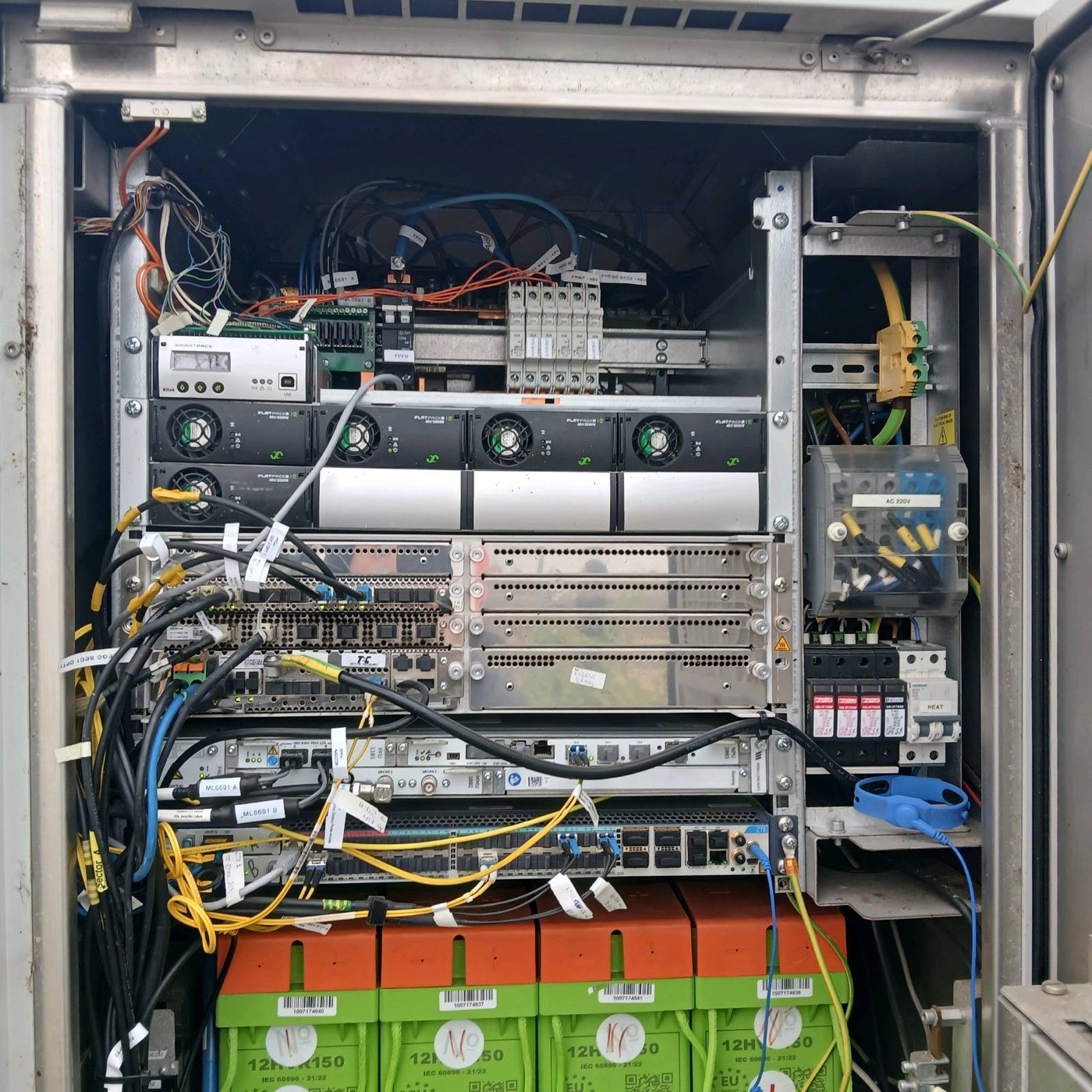
- Rectifier system: a shelf of plug-in rectifier modules that converts AC to -48 V DC, feeds the load and keeps the batteries charged. On float, a 48 V VRLA string typically sits around 54 V, set to the battery manufacturer's float voltage.
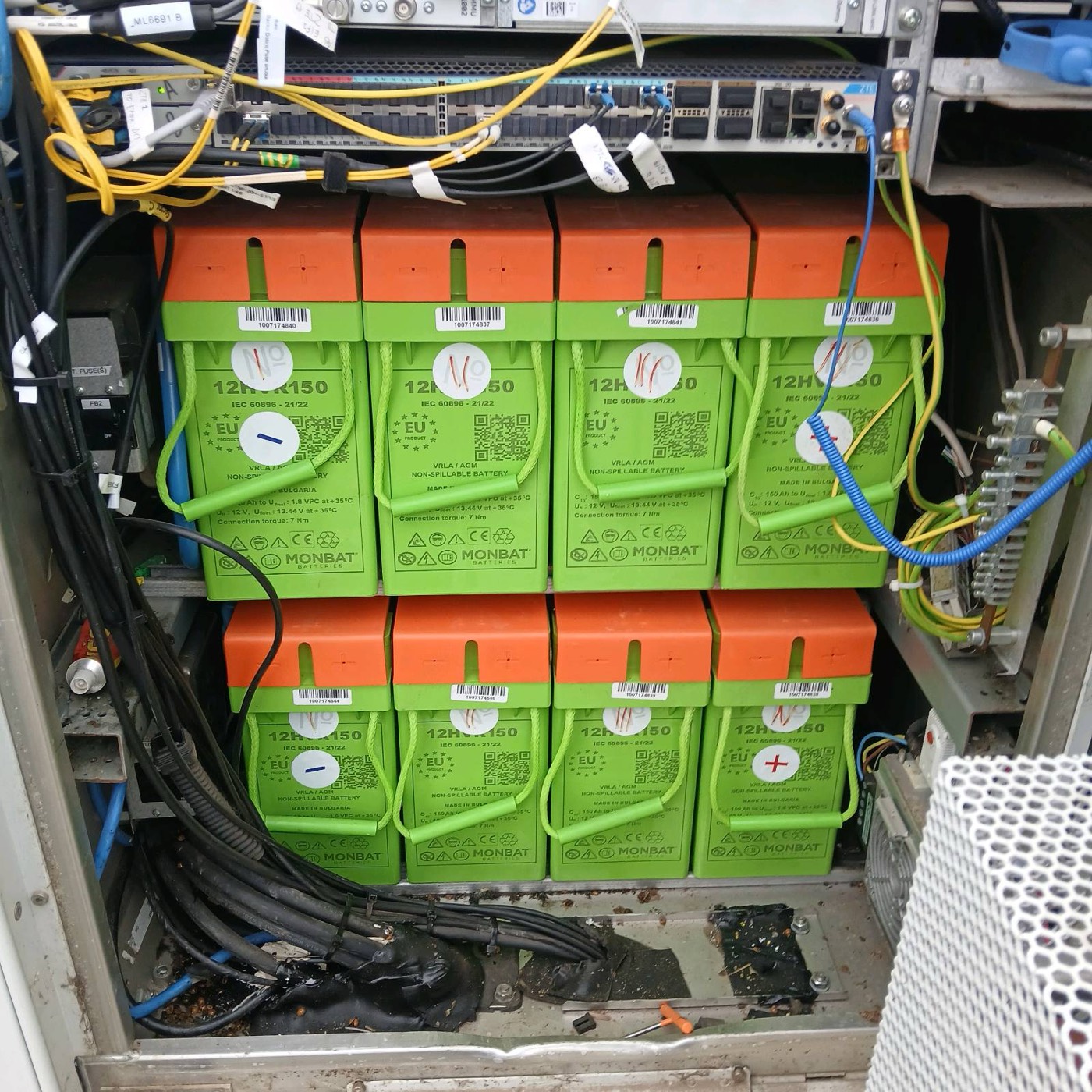
- Battery string: four 12 V VRLA blocks in series per string, or 48 V lithium modules with their own battery management system. When mains fails, the batteries take over instantly with no switching.
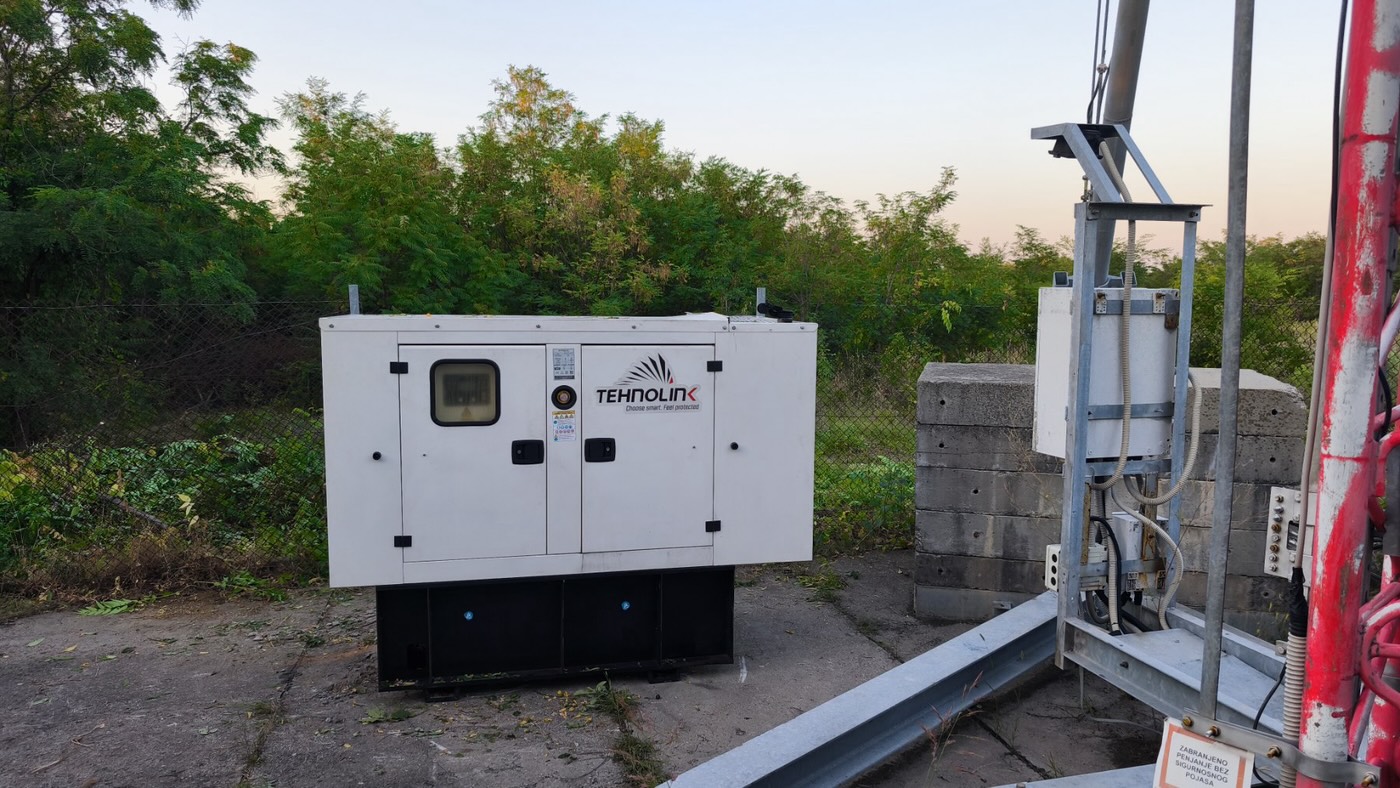
- Generator: a fixed diesel generator with an automatic transfer switch on sites that have one, or a portable generator brought in when the batteries are running low.
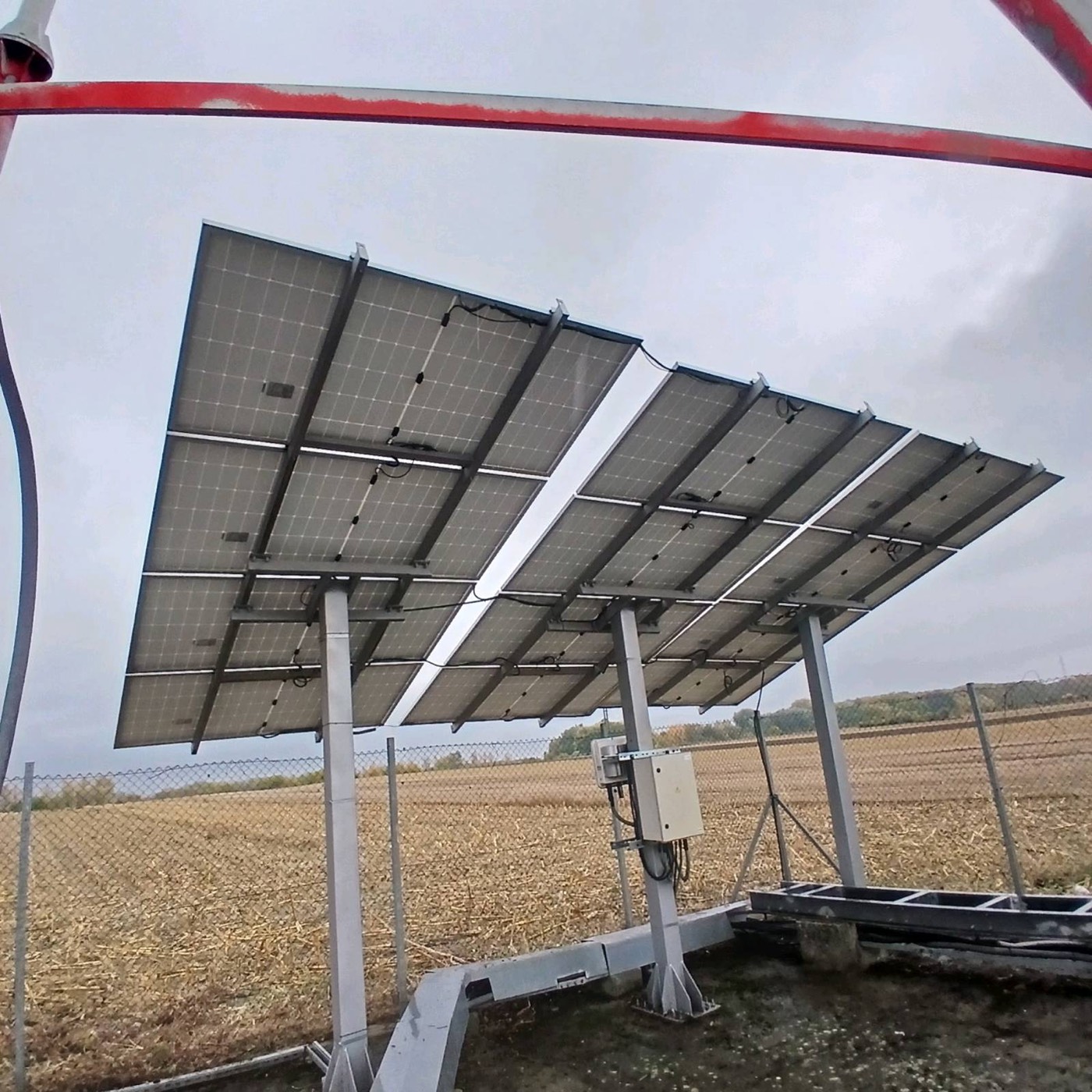
- Hybrid supply: on some off-grid or weak-grid sites, a solar array charges the batteries during the day and the generator runs only when the batteries need it.
How long will the batteries hold the site?
Battery autonomy is the time the batteries can carry the site load from full charge down to the low-voltage disconnect. The first estimate is simple:
Autonomy (hours) ≈ usable capacity (Ah) / load current (A)
The rated capacity printed on the block is not the usable capacity. Three things reduce it:
- Age. Capacity falls as the battery ages. IEEE 1188 recommends replacing a VRLA battery when its tested capacity drops below 80% of rated.
- Temperature. Cold reduces the capacity available today. Heat does the opposite in the short term but shortens battery life. A widely used rule of thumb is that VRLA service life roughly halves for every 10°C of sustained operation above 25°C.
- Discharge rate. Ah ratings are given for a stated discharge time, often 10 hours. Discharging faster gives fewer usable Ah. The load also draws more current as the voltage falls, because the radios take roughly constant power.
Worked example: estimating autonomy
This is an example with assumed values, not data from a real site.
| Step | Example value |
|---|---|
| Battery bank | 2 parallel strings of 4 x 12 V, 150 Ah each = 300 Ah at 48 V |
| Site load | 40 A at -48 V (about 2 kW) |
| Naive autonomy | 300 Ah / 40 A = 7.5 h |
| Ageing allowance (string near replacement, 80% capacity) | 300 x 0.8 = 240 Ah |
| Allowance for discharge rate and temperature (assumed 0.85) | 240 x 0.85 = 204 Ah |
| Realistic autonomy | 204 Ah / 40 A ≈ 5 h |
The bank that looks like seven and a half hours on paper gives about five near the end of its life. Manufacturer discharge tables give exact figures; the only way to know the real capacity of an installed string is a discharge test.
Why do rectifiers need N+1 redundancy?
The rectifier must supply the site load and recharge the batteries at the same time after a mains failure. With N+1 redundancy, the system has one module more than it needs, so a single failed module does not leave the site short of power or the batteries undercharged.
Size the rectifier for the load plus the battery charge current, then add one module. The charge current is limited to the battery manufacturer's recommendation, often around a tenth of the Ah rating for VRLA. A rectifier fail alarm on an N+1 system is not urgent on its own, but it removes the margin, so it should be fixed before the next mains failure, not after it.
What are LVD and load shedding?
A low-voltage disconnect (LVD) opens a contactor when the battery voltage falls to a set threshold, so the batteries are not deep-discharged and permanently damaged. Many sites use two stages:
- Non-priority LVD disconnects less critical loads first, for example extra capacity layers or secondary equipment, so the remaining batteries last longer for the essential service.
- Priority (battery) LVD disconnects the last loads, typically transmission and the core radio service, at the final end voltage set from the battery manufacturer's data.
Agree the shedding order with the operator, record it, and check that the settings on site match. A wrongly set LVD either shuts the site down early or lets the batteries discharge too far.
Which alarms matter most?
| Alarm | What it means | Typical response |
|---|---|---|
| Mains fail | Grid supply lost, site on batteries | Check autonomy and generator status; start the clock |
| Battery on discharge | Batteries are carrying the load | Confirm with mains status; on a non-mains event, investigate the rectifier |
| Rectifier fail | One or more modules failed | Check remaining capacity; replace the module within the agreed time |
| Battery low | Voltage near the end of autonomy | Generator must be running or dispatched now |
| LVD operated | Load disconnected | Site is partly or fully down; restore power first |
| Generator fail or fail to start | Generator did not take the load | Dispatch a technician or a portable generator |
| Low fuel | Tank below its threshold | Plan refuelling before the next outage |
| High temperature | Cabinet or shelter overheating | Check cooling; heat shortens battery life |
A mains fail on its own is routine. A mains fail with a rectifier fail and a generator fail on the same site is an outage in the making.
How do generators start and when should portable units be sent?
A fixed generator usually starts automatically: on mains fail after a short delay, or on a battery voltage threshold on hybrid and DC generator sites, and runs until mains returns or the batteries are recharged. A generator that is rarely exercised under load is the one that fails on the day it is needed. Many operators borrow from NFPA 110, which calls for monthly exercise of emergency generators under load. For a full generator routine, see this generator maintenance schedule and checklist.
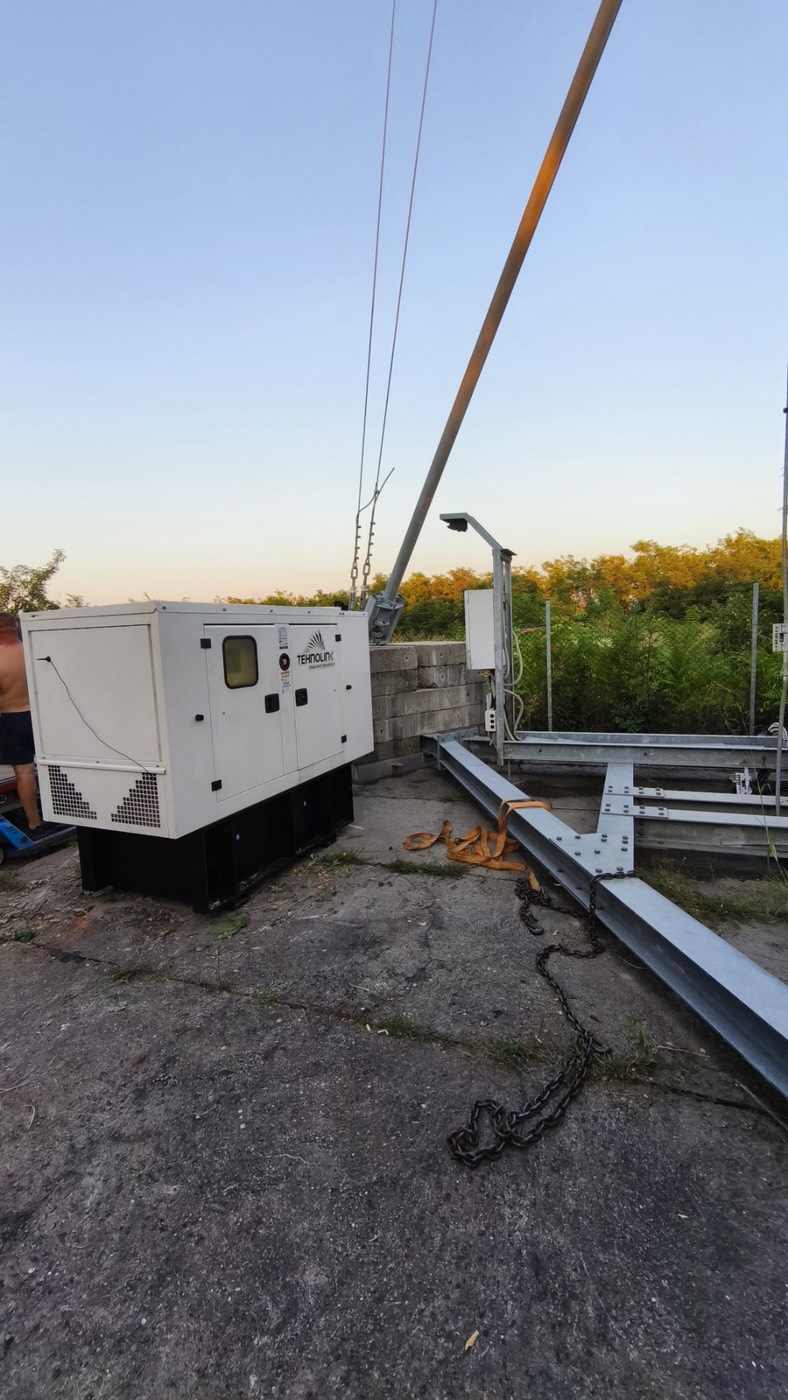
Portable generators cover sites without a fixed unit. A technician connects it to the site's generator socket or changeover switch and stays or returns to refuel. The decision to dispatch should be made on the expected autonomy, not on the battery low alarm, because travel time often exceeds what is left in the batteries by then.
Fuel at remote sites is a maintenance task in its own right: level sensors that report remotely, refuelling scheduled before the tank runs low, checks for water and contamination, and tamper or theft alarms where fuel theft is a risk. More on this in diesel fuel management for standby generators.
How are hybrid solar sites different?
On a hybrid site the batteries cycle every day instead of sitting on float, so they age faster. The generator runs fewer hours but must still start reliably after a run of cloudy days. Maintenance adds panel cleaning and a comparison of solar yield with earlier periods, so a dirty or shaded array is caught early.
Backup power maintenance checklist
Rectifier
- Read output voltage, load current and battery current; compare float voltage with the battery manufacturer's setting.
- Check every module's status LEDs and alarms; confirm N+1 is still true for the present load.
- Verify LVD thresholds and the shedding order against the site record.
- Clean fans and check that alarms reach the monitoring system.
Batteries
- Measure every block voltage and the string voltage on float; look for blocks that stand out.
- Measure ohmic values (impedance or conductance) where the procedure requires it, and trend them visit to visit.
- Check terminals, connectors and torque; look for swelling, leaks and heat marks.
- Record battery temperature and the string installation date.
- Run a capacity test at the interval in IEEE 1188 or the contract, and replace strings below 80% of rated capacity.
Generator
- Run under load and check that it starts on a simulated mains failure.
- Check fuel level, oil, coolant, belts, battery and the starter battery charger.
- Read the controller's event log, not only the current status.
- Check the transfer switch and the portable generator socket, where fitted.
Solar (hybrid sites)
- Clean panels and check mountings, cabling and connectors.
- Read the charge controller log and compare yield with earlier periods.
What to do in a long regional outage
When a storm or grid failure takes out a whole region, there are more sites on batteries than portable generators and crews. Decide in advance how sites are ranked:
- Hub and aggregation sites first. A site that carries transmission for others takes the downstream sites with it when it fails.
- Sites serving emergency services, hospitals and critical customers as agreed with the operator.
- Sites with the least remaining autonomy, calculated from the last known battery condition and present load, not from the nameplate.
- Sites with no overlapping coverage, where losing one site leaves an area with no service.
- Travel time and access, so a generator is not sent to a site it cannot reach before the batteries run out.
A single platform that combines live alarms, battery history and crew locations makes this ranking a matter of minutes rather than phone calls. For the control room side, see what a 24/7 NOC does for field infrastructure.
Frequently asked questions
How long do cell site batteries last during a power outage?
It depends on battery capacity, age, temperature and the site load. A first estimate is usable capacity in Ah divided by load current in A. An aged string can deliver much less than its rating.
What voltage do telecom batteries float at?
A 48 V VRLA string made of four 12 V blocks typically floats around 54 V, which is about 2.25 V per cell. The exact value comes from the battery manufacturer and is usually temperature compensated by the rectifier.
What is an LVD on a telecom site?
A low-voltage disconnect is a contactor that disconnects load when the battery voltage falls to a set threshold. It protects the batteries from deep discharge. Two-stage LVDs drop non-priority loads first and keep the essential service running longer.
When should VRLA batteries be replaced?
IEEE 1188 recommends replacing a VRLA battery when its tested capacity falls below 80% of rated. Rising ohmic values, blocks that drift on float, swelling or leaks are reasons to test or replace sooner.
How often should a site generator be tested?
Many operators run fixed site generators under load at least monthly, following the practice NFPA 110 sets for emergency generators, and check them fully on every preventive visit.
Sources
- IEEE 1188, Recommended Practice for Maintenance, Testing, and Replacement of VRLA Batteries for Stationary Applications.
- IEEE 450, Recommended Practice for Maintenance, Testing, and Replacement of Vented Lead-Acid Batteries for Stationary Applications.
- NFPA 110, Standard for Emergency and Standby Power Systems, for generator exercise and testing practice.
- Rectifier, battery, generator and solar charge controller manufacturers' operation and maintenance documentation.
- Domar field procedures for telecom site backup power maintenance.
- Related reading: telecom site preventive maintenance checklist and remote generator monitoring.

Every site, every asset and every visit in one place
AllSiteCare brings alarms from site equipment, preventive maintenance plans and live field reports together, so you see what is happening at every location and what needs a visit.